
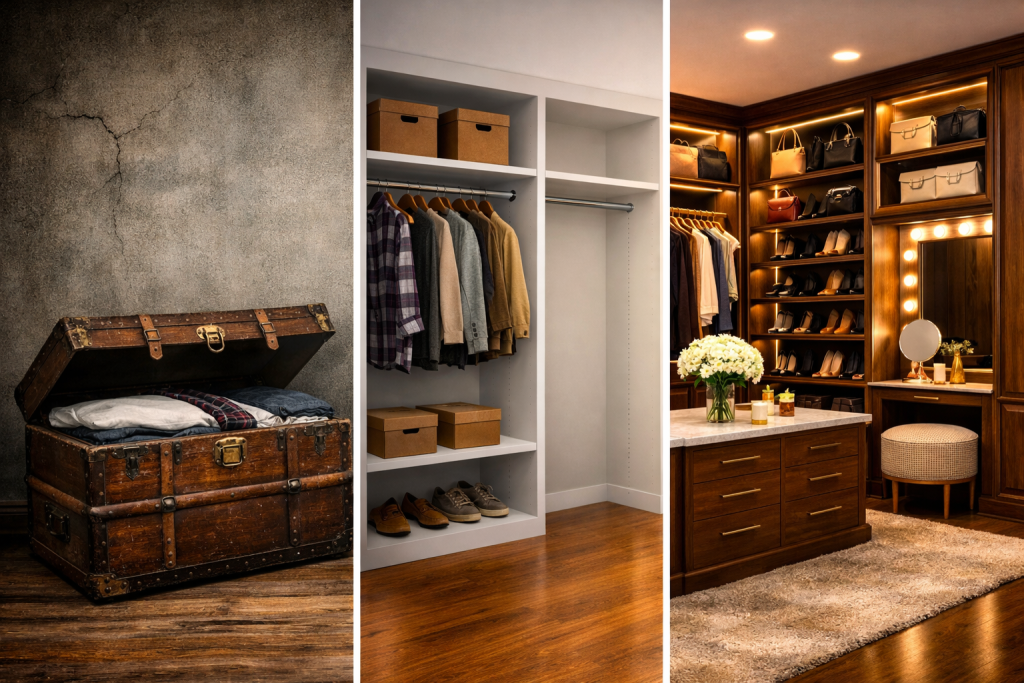
When was the last time you stopped to think about your closet?
For most of us, it’s simply part of our daily routine, a place to hang clothes, store shoes, and keep everything organized. But closets haven’t always been a standard feature in our homes. In fact, the way we store our belongings has changed dramatically over the centuries, evolving alongside our lifestyles, homes, and expectations.
Before Closets: Chests and Wardrobes

Hundreds of years ago, built-in closets didn’t exist. Clothing was typically stored in wooden chests, trunks, or large freestanding wardrobes. These pieces of furniture were often handcrafted and considered valuable possessions, sometimes passed down through generations.
People also owned far fewer clothes than they do today. Every garment served a purpose, and storage needs were relatively simple.
As homes grew larger and architecture evolved, the idea of dedicating a permanent space for clothing began to take shape.
The Arrival of the Built-In Closet
By the late 19th and early 20th centuries, built-in closets became increasingly common in North American homes. Rather than relying on bulky furniture, homeowners now had dedicated storage built directly into the structure of the house.
These early closets were practical but basic, a single hanging rod, one shelf, and little flexibility. At the time, that was enough.
As wardrobes expanded and lifestyles changed, however, those simple designs began to show their limitations.
The Builder-Grade Standard
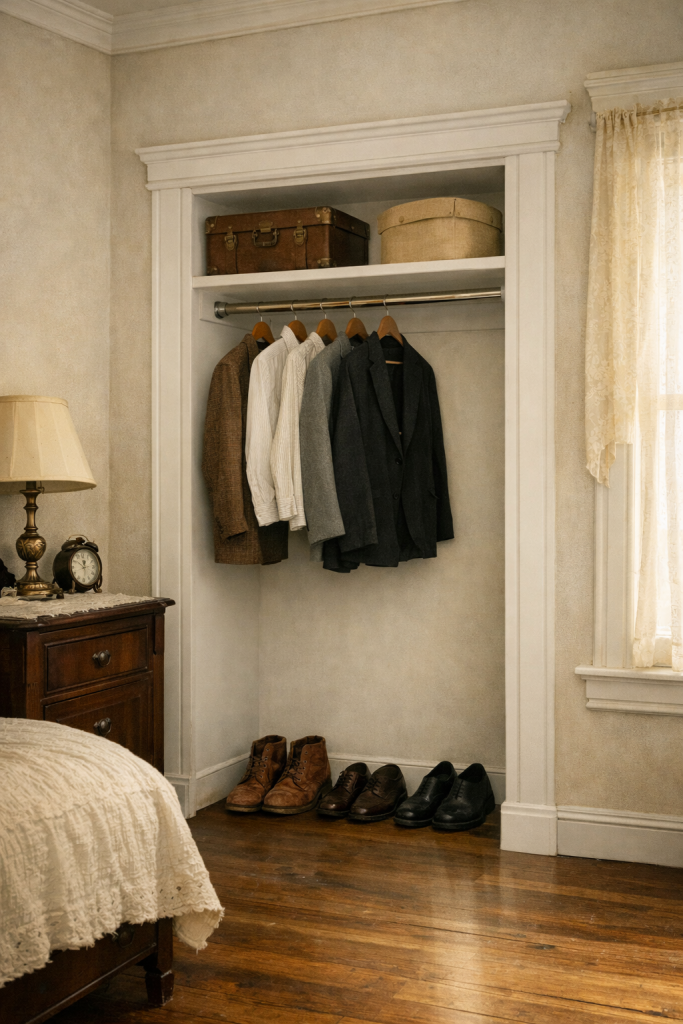
During the post-war housing boom, millions of homes were built quickly and efficiently. To keep construction costs manageable, many builders adopted standardized closet layouts.
This is the style many homeowners still recognize today: one shelf across the top and a single hanging rod underneath.
While functional, this one-size-fits-all approach rarely reflects how people actually live. Families have different storage needs, different routines, and different collections of clothing and accessories. Yet many closets have remained virtually unchanged for decades.
The Rise of Personalized Storage
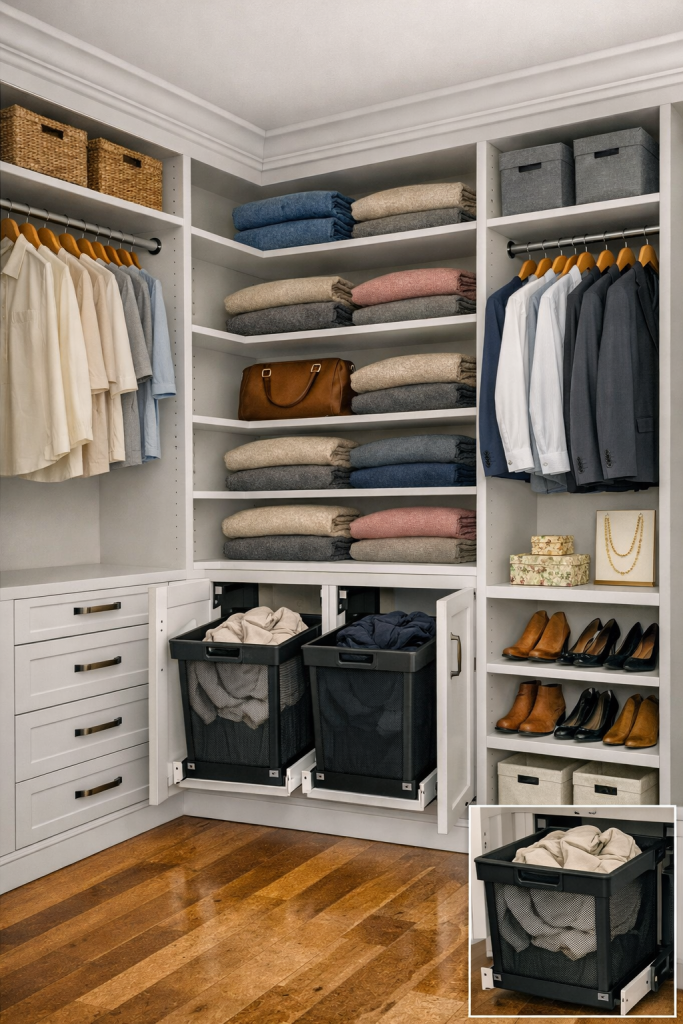
Today’s homeowners expect more from every room in their home, including their closets.
Modern custom closets are designed around the people who use them. Adjustable shelving, soft-close drawers, dedicated shoe storage, pull-out hampers, accessory organizers, and integrated lighting all help create a space that is both beautiful and practical.
Instead of adapting your belongings to fit the closet, the closet is designed to fit your lifestyle.
Whether you need extra hanging space for business attire, storage for seasonal clothing, or an efficient shared closet for two people, thoughtful design makes everyday routines easier.
Looking Ahead
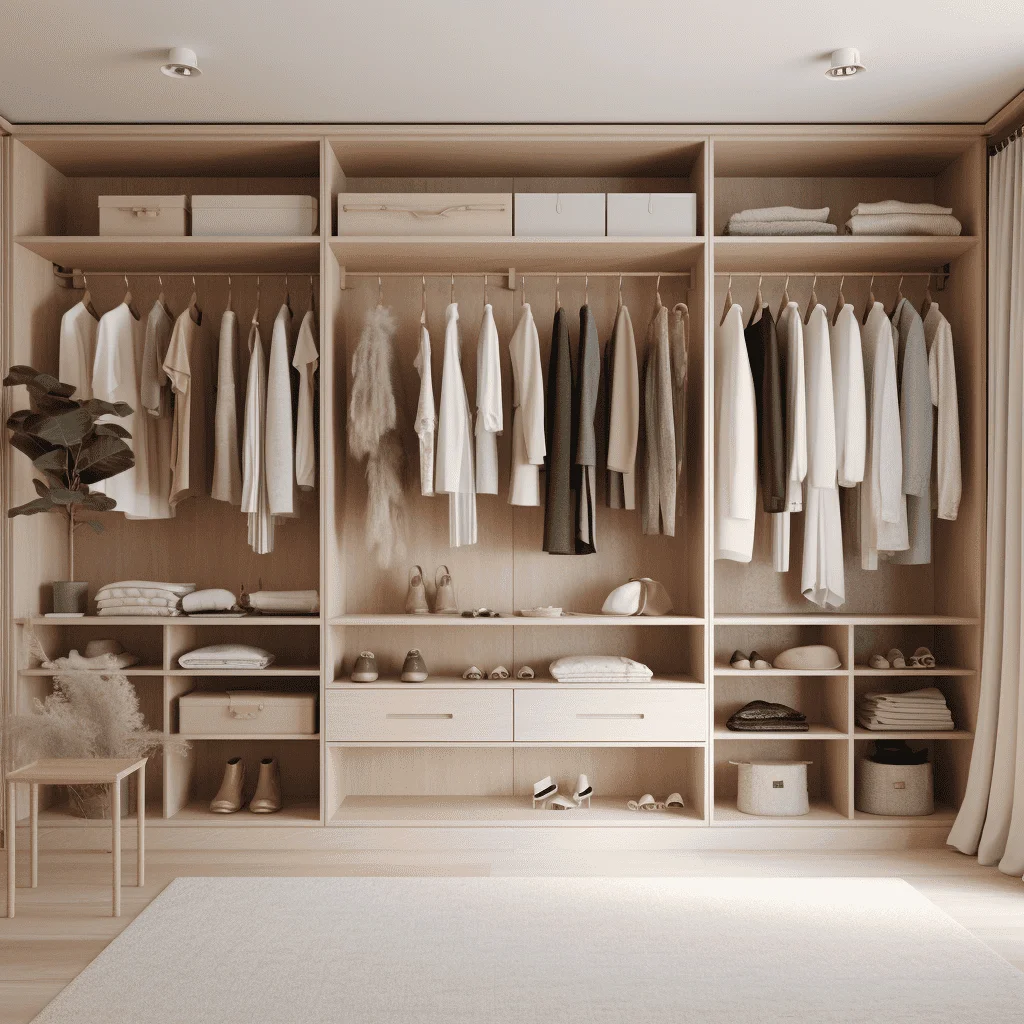
Closet design continues to evolve.
Homeowners are embracing warm wood finishes, minimalist hardware, floor-to-ceiling cabinetry, hidden storage solutions, and integrated lighting that turns a functional space into one that feels polished and inviting. Sustainability and adaptable designs are also becoming increasingly important, allowing storage systems to evolve as families and lifestyles change.
The closet is no longer an afterthought, it’s becoming an essential part of thoughtful home design.
More Than Just a Place to Hang Clothes
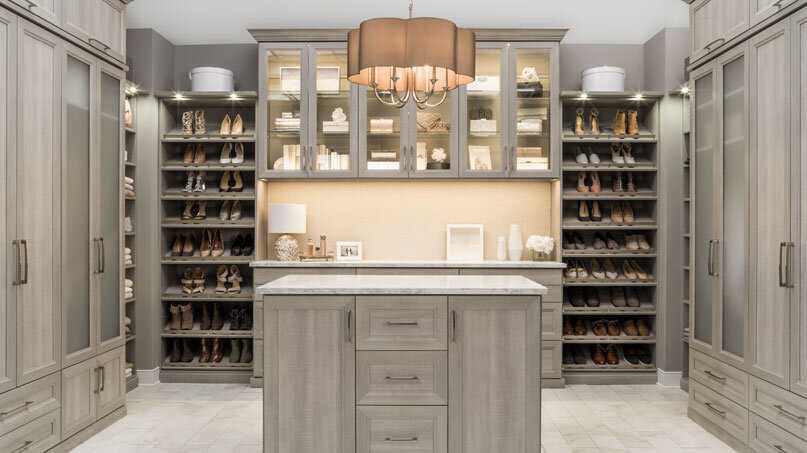
It’s fascinating to think that what began as a simple wooden chest has transformed into one of the most personalized spaces in a home.
A well-designed closet isn’t simply about creating more storage. It’s about making better use of the space you already have, simplifying your daily routine, protecting the things you value, and adding lasting functionality to your home.
At Honest Group Ltd., we believe every storage solution should be as unique as the people who use it. Whether you’re upgrading a primary bedroom, creating a more functional mudroom, or designing storage for another area of your home, custom cabinetry allows every inch of space to work harder for you.
The history of the closet reminds us that great design is always evolving, and the best storage solutions are the ones built around the way we live today.


